


Not long ago, PCOS was something many women only discovered after months or even years of confusion.
Irregular periods were brushed aside as “normal hormonal changes.” Sudden weight gain was blamed on lifestyle. Persistent acne was treated as a skin issue. Difficulty conceiving often became the moment when deeper investigations finally began.
Today, the story looks different, which raises an important question: Why PCOS is increasing rapidly in women, especially among younger age groups.
More women in their twenties are being diagnosed. Teenagers are hearing the term earlier than ever. Conversations around hormonal imbalance, fertility struggles, and metabolic health have become far more common.
And naturally, the question comes up:
Why does it feel like PCOS is everywhere now?
The answer is not simple, but it is real.
According to the World Health Organization, PCOS affects an estimated 8% to 13% of women of reproductive age worldwide, making it one of the most common hormonal conditions affecting women. What’s even more concerning is that up to 70% of women may remain undiagnosed, meaning millions could be dealing with symptoms without knowing the root cause.
So yes, awareness has improved. But awareness alone doesn’t explain why so many more women seem to be affected. Something about modern life is making hormonal health harder to maintain.
PCOS Is Not Just a Reproductive Issue
One reason PCOS is often misunderstood is that people reduce it to a fertility problem.
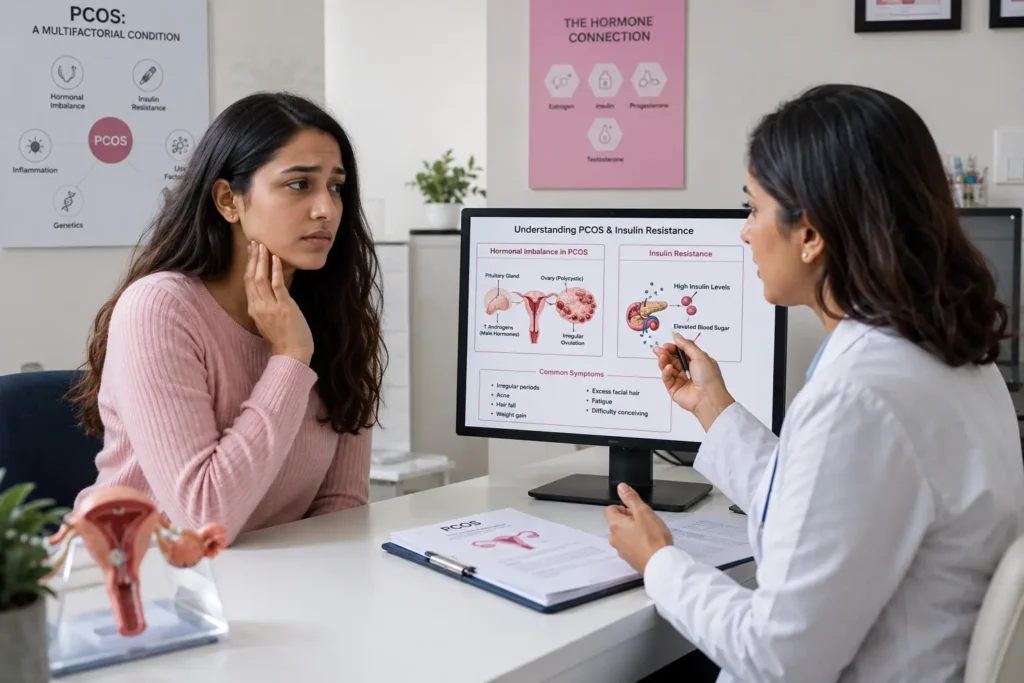
It’s much bigger than that. PCOS, or Polycystic Ovary Syndrome, affects multiple systems in the body, not just the ovaries.
It can influence:
- Hormone production
- Blood sugar regulation
- Metabolism
- Ovulation
- Menstrual cycles
- Skin health
- Weight management
- Emotional well-being
This is why one woman may struggle with irregular periods, while another deals with stubborn acne, unwanted facial hair, or fatigue that never quite makes sense.
The symptoms look different, but many of them connect back to the same internal imbalance.
Why PCOS Is Increasing Rapidly in Women: The Lifestyle Connection
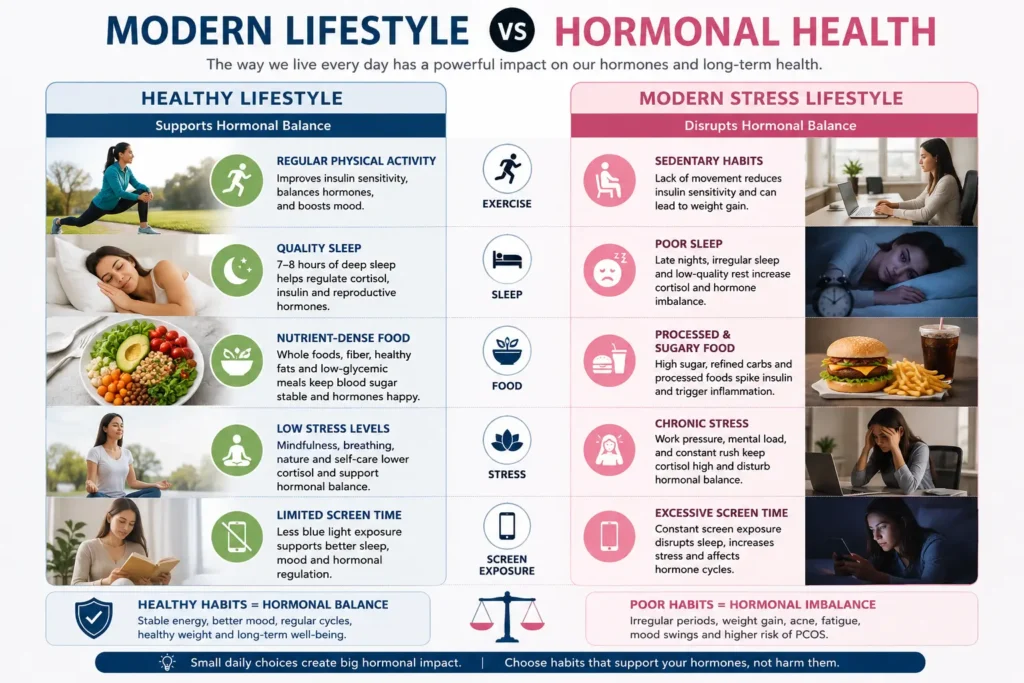
Human biology hasn’t changed dramatically in the last few decades. But the way we live certainly has. And hormones respond to lifestyle far more than most people realize.
Compared to previous generations, many women today experience:
- More sedentary work routines
- Higher chronic stress
- Less sleep
- Greater reliance on processed food
- Constant screen exposure
- Irregular meal timing
Individually, these may seem harmless. Together, they create an environment where hormonal regulation becomes increasingly difficult.
The Real Link Between PCOS and Insulin Resistance
One of the biggest reasons why PCOS is increasing rapidly in women is the rise in insulin resistance and metabolic dysfunction. And despite how common it is, many women don’t fully understand what that means. Insulin is the hormone that helps your body move sugar from the bloodstream into cells, where it can be used for energy. When the body becomes less responsive to insulin, it starts producing more of it to compensate.
And high insulin levels don’t just affect blood sugar. They can also stimulate the ovaries to produce excess androgen hormones that are naturally present in women, but only in smaller amounts. That hormonal shift can interfere with ovulation, making menstrual cycles irregular and affecting fertility. This is one reason why PCOS is increasingly linked to modern metabolic health.
And here’s what matters:
You do not have to be visibly overweight to have insulin resistance.
Even women who appear healthy can experience a hidden metabolic imbalance.
The Food Environment Has Changed More Than We Realize
Take a realistic look at how people eat today compared to 20 years ago.
More packaged snacks. More sugary drinks. More ultra-processed convenience meals.
Less fiber.Less nutrient-dense food.
This matters because frequent blood sugar spikes put repeated pressure on insulin regulation.
Over time, that affects hormonal balance. Highly processed diets are also linked with increased inflammation, which is another factor researchers continue to study in relation to PCOS.
This doesn’t mean one unhealthy meal causes a hormonal imbalance. But years of metabolic strain can absolutely contribute.
Stress Is No Longer Occasional It’s Constant
Stress used to come in phases.
Now, for many women, it’s built into daily life.
Work pressure.
Mental load.
Family responsibilities.
Financial stress.
Always being connected.
Never truly switching off.
The body doesn’t separate emotional stress from physical stress. It responds biologically. When stress becomes chronic, cortisol levels remain elevated for longer periods. And cortisol affects more than mood.
It can influence:
- Appetite and cravings
- Blood sugar control
- Sleep quality
- Hormonal signaling
- Inflammation
Stress alone may not cause PCOS, but it can absolutely worsen the internal conditions that make hormonal imbalance more likely.
Sleep Deprivation Is a Bigger Hormonal Trigger Than Most Women Think
Poor sleep has become so normalized that many women barely think about it.
Late-night scrolling. Work carried into bedtime. Interrupted sleep. Inconsistent schedules. Poor sleep and hormonal health are inter connected.
But sleep is deeply connected to hormone regulation. Research shows that poor sleep can negatively affect insulin sensitivity, appetite hormones, and metabolic function. That means poor sleep doesn’t just leave you tired. It can quietly make hormonal health harder to maintain. And when this becomes a long-term pattern, the effects add up.
Younger Women Are Showing Symptoms Earlier
This is one of the most noticeable changes. PCOS is being diagnosed in younger women more frequently than before. Teenagers reporting irregular cycles, weight fluctuations, acne, or hormonal symptoms are becoming more common. Why?
There’s no single answer, but likely contributors include:
- Earlier exposure to processed diets
- Lower daily physical activity
- More screen-heavy routines
- Poor adolescent sleep habits
- Academic and emotional stress
Hormonal systems are sensitive during developmental years. When the body experiences metabolic stress early, symptoms may show earlier, too.
Environmental Hormone Disruptors May Also Be Part of the Picture
This is an area researchers continue to explore, but it’s worth understanding.
Modern life exposes women to chemicals through plastics, cosmetics, personal care products, pesticides, and household items at levels that previous generations experienced less frequently.
Some of these substances are called endocrine disruptors because they may interfere with hormone signalling. This does not mean every day products directly “cause” PCOS.
But long-term cumulative exposure is increasingly being studied as one possible contributor to hormonal disorders. It’s part of a bigger conversation around modern reproductive health.
Better Diagnosis Is Also Playing a Role
Not every increase means the condition itself is becoming dramatically more common. Some of it is simply better awareness. Years ago, women often lived with symptoms for years without answers.
Now:
- More women seek medical advice earlier
- Doctors recognize symptoms faster
- Fertility assessments happen sooner
- Online awareness helps women connect symptoms sooner
That’s a positive shift.
But improved diagnosis explains only part of the story.
Why This Matters Beyond Fertility
Many women only take PCOS seriously when fertility becomes a concern. But PCOS affects much more than pregnancy planning.
Long-term unmanaged hormonal and metabolic imbalance may increase the risk of:
- Type 2 diabetes
- Insulin resistance progression
- Cardiovascular health concerns
- Weight management difficulties
- Emotional health struggles
That’s why early awareness matters. PCOS is not just about periods. It’s about long-term women’s health.
So What Can Women Actually Do?
This is not about fear. And it’s definitely not about blaming women for modern life. But awareness helps.
Supporting hormonal health may involve:
- More balanced nutrition
- Better sleep consistency
- Regular physical movement
- Stress management
- Targeted nutritional support where appropriate
For women already experiencing symptoms, understanding the root causes matters far more than only reacting to surface-level signs.
FAQs
Q. Why is PCOS increasing rapidly in women today?
Yes, experts believe both diagnosis rates and underlying risk factors are increasing. Modern lifestyle changes, insulin resistance, stress, and environmental factors all appear to be contributing.
Q. Can someone have PCOS even if they are not overweight?
Yes. This is a very common misconception.
Many women with normal body weight experience PCOS because the condition is linked to hormones and insulin regulation, not just body size.
Q. Does stress directly cause PCOS?
Stress alone is unlikely to be the sole cause, but chronic stress can worsen hormonal imbalance, insulin response, and inflammation, which may contribute to symptoms.
Q. Why are younger women being diagnosed more often?
Likely because of a combination of better awareness and earlier exposure to metabolic and lifestyle stressors like poor sleep, processed food, inactivity, and chronic stress.
Q. Can PCOS be managed successfully?
Yes.
With the right lifestyle support, medical guidance, and targeted interventions, many women manage symptoms effectively and improve their hormonal health significantly.